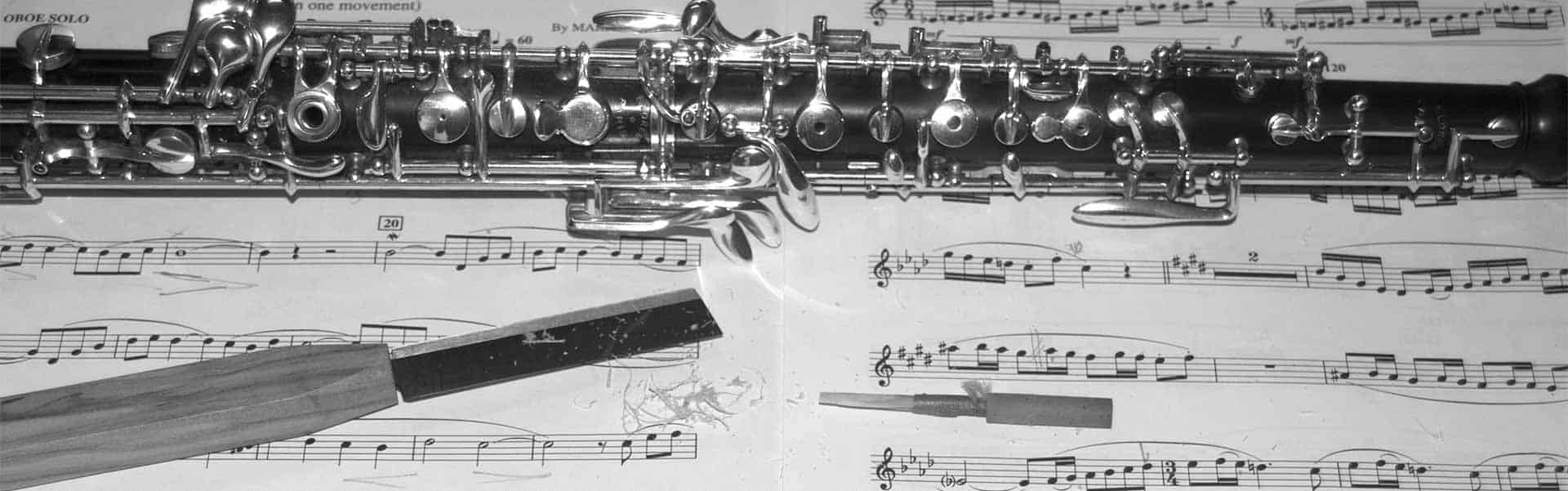
Oboe Reed FAQ
Take a couple scrapes out of each side of the heart and tip
Clip the tip of the reed (using a knife or razor blade), a little at a time till the crow is a “C” pitch.
Place the reed in your mouth down to the string and blow. The sound produced is referred to as the “crow”.
Scrape a little, very little, directly behind the tip on each side of the spine.
First, check the crow of the reed. If it is a C# or higher, scrape out of the heart.
If the crow is a “c” or slightly lower, it is not the reed. Chances are, you are biting – you need to bring your corners in and drop your jaw.
The crow is flat, clip the reed. See question #2.
If the pitch in the middle octave is not flat, chances are you are not supporting. Bring in your corners of your embouchure, making your embouchure rounder – then blow and support
The wire stabilizes and focuses the tone of the notes above the staff. The wire DOES NOT control the opening!
Check out our selection of truly custom handmade oboe reeds